Travel Documents for Latin America & the Caribbean 2026
Passport, digital forms and Cuba's eVisa: which documents you need to travel from Spain to the Dominican Republic, Cuba, Mexico and Colombia.
Equipo Ingrid Travel
12 de July de 2026 · 5 min read
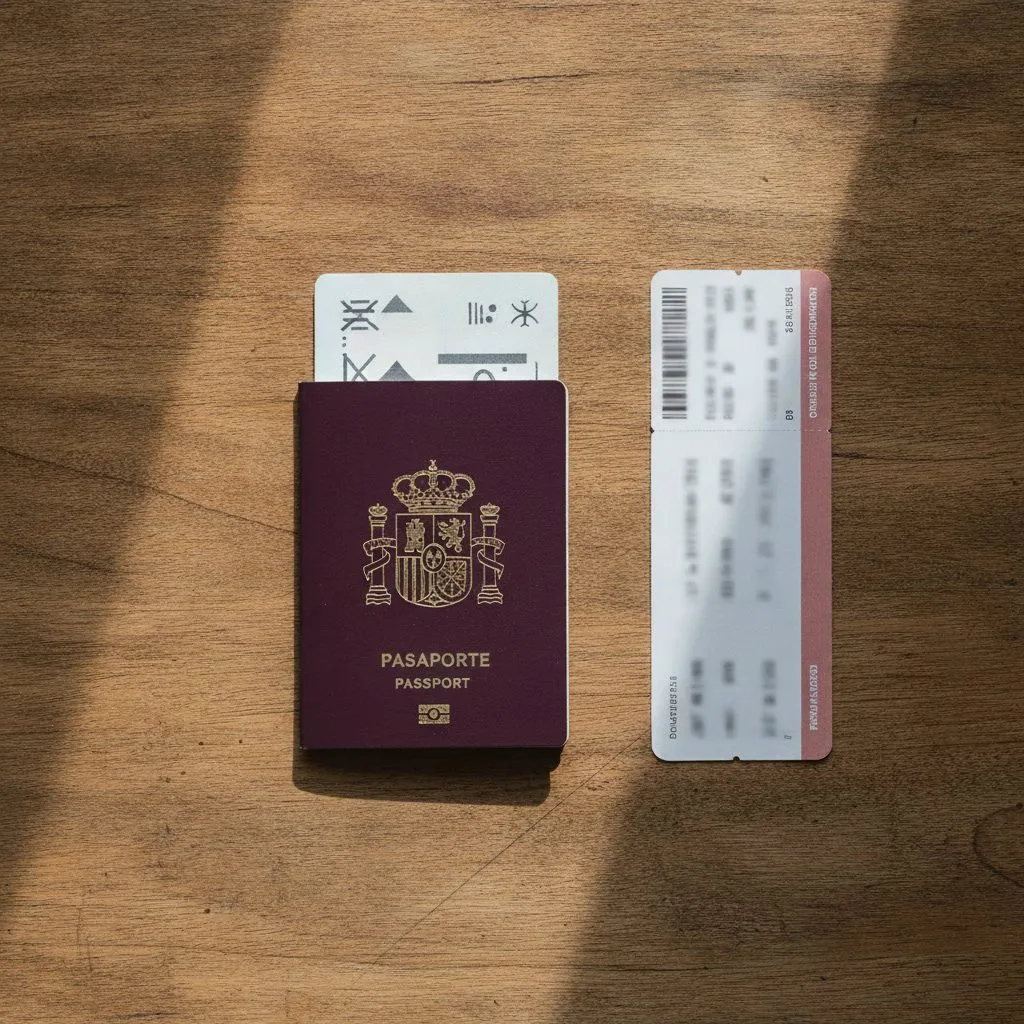
To travel from Spain to Latin America and the Caribbean's star destinations — the Dominican Republic, Cuba, Mexico and Colombia — you generally need a valid passport (standard practice is at least 6 months of remaining validity), a return ticket and each country's digital entry form. For short tourist stays, none of the four requires a visa for Spanish citizens, with one exception: Cuba, which has required an eVisa since 2025. At the agency we check every client's documents before they fly, and this guide summarises what we verify, country by country.
One important note before we start: immigration requirements change. This guide is a general map; the final word always belongs to each country's official source (consulate, embassy or migration website), which you should check a few days before travelling.
What do I need, in general, to travel to Latin America?
The basic kit that applies to almost any destination in the region:
- A valid passport: although each country sets its own rule, standard practice is to require (or recommend) at least 6 months of validity from your entry date. If your passport is close to expiry, renew it before booking.
- A return or onward ticket: both the airline at check-in and the immigration officer on arrival may ask for it.
- A digital entry form: nearly every country has digitalised it. It is completed online before travelling and is usually free.
- Recommended: travel insurance with medical cover (mandatory in some destinations, as you will see) and your accommodation booking at hand.
A Spanish national ID card is not valid for any of these destinations: passport only.
What documents does the Dominican Republic require?
The simplest of the four. For short tourist stays, Spanish citizens do not need a visa. The usual requirements:
- A valid passport.
- The Dominican e-ticket: the single electronic entry and exit form, free of charge, completed on the official migration website before your flight. Keep the QR code on your phone.
- A return ticket.
If the Dominican Caribbean is your destination, our full guide is at Punta Cana, with route details in our Madrid-Punta Cana flight guide.
What documents does Cuba require?
The one that raises the most questions, because it changed recently. Since 2025, Cuba has replaced the classic tourist card with an eVisa (electronic visa) applied for online before travelling. The usual requirements:
- A valid passport.
- A Cuban eVisa obtained before the trip.
- Travel medical insurance with coverage in Cuba: it is mandatory and you may be asked for proof on arrival.
- The advance traveller information digital form.
This is the destination where we most strongly recommend verifying everything with the official source (the Cuban consulate) or letting the agency handle it, because process details have kept evolving since the change. If Havana is on your radar, start with our Havana guide.
What documents does Mexico require?
For tourism, Spanish citizens do not need a visa. The usual requirements:
- A valid passport.
- The migration form: Mexico has been digitalising the old paper format (FMM); the exact procedure can vary by arrival airport. The official reference is the National Migration Institute (INM).
- A return ticket and, occasionally, proof of accommodation or financial means.
The immigration officer decides how many days of stay you are granted, so keep your hotel booking at hand. Heading to the Mexican Caribbean? All the destination information is in our Cancún guide.
What documents does Colombia require?
For short tourist stays, Spanish citizens do not need a visa. The usual requirements:
- A valid passport.
- The digital migration check-in (a pre-travel online form, per Migración Colombia's current rules).
- A return or onward ticket.
The official sources are Colombia's Foreign Ministry and Migración Colombia. If you are planning the classic Bogotá-Medellín-Cartagena route, our Bogotá guide will interest you too.
Does ETIAS affect my trip to Latin America?
No. This is a misconception we hear every week: ETIAS is an authorisation for travellers from third countries to enter Europe, not for Europeans to leave it. As a Spanish citizen travelling to Latin America, ETIAS does not apply to you in any scenario. Moreover, it still has no confirmed start date as of today. If you see it mentioned in a travel checklist for the Americas, ignore it: it is noise.
What about minors travelling alone or with one parent?
A sensitive point worth preparing well in advance. Besides the minor's own passport (children cannot travel on their parents' passport):
- If the minor travels alone or with only one parent, in Spain it is standard to obtain a travel authorisation (a permission declaration from the other parent or both), processed at the National Police, Guardia Civil or a notary.
- Some destination countries have their own additional requirements for minors, especially if the minor resides there or holds dual nationality.
The exact procedure and documents vary case by case, so verify the current process with official sources before travelling. At the agency we always double-check this when there are minors on the booking: it is the most expensive oversight there is, because it surfaces at the boarding desk.
Our final advice
Run your document check when you book and repeat it one week before flying: passport with plenty of validity, the country's digital form completed, insurance in place where required, and minors' authorisations in order. Ten minutes of checking prevents travel's worst-case scenario: staying on the ground with your bags packed.
Would you rather we did the checking? With any of our packages, the document checklist is part of the service. It is the invisible side of booking with an agency: nobody sees it — until the day you need it.
Frequently asked questions
How much passport validity do I need to travel to Latin America? +
Standard practice is at least 6 months of passport validity from your entry date, although each country sets its own rule. Verify your destination's specific requirement with the official source and, if your passport is close to expiry, renew before booking.
Do Spanish citizens need a visa for the Dominican Republic, Cuba, Mexico or Colombia? +
For short tourist stays, not for the Dominican Republic, Mexico or Colombia: a passport, the digital entry form and a return ticket are enough. The exception is Cuba, which since 2025 requires an eVisa plus medical insurance. Always verify current requirements with the official source.
Do I need ETIAS to travel from Spain to Latin America? +
No. ETIAS is an authorisation for third-country travellers to enter Europe; it does not apply to Spanish citizens leaving Spain for the Americas. It also still has no confirmed start date as of today.