Baggage on Flights to Latin America: Weight & Size 2026
How many kilos your ticket to Punta Cana, Cancún or Bogotá includes, cabin bag sizes and how to avoid excess fees: airline table and tricks.
Equipo Ingrid Travel
14 de July de 2026 · 5 min read
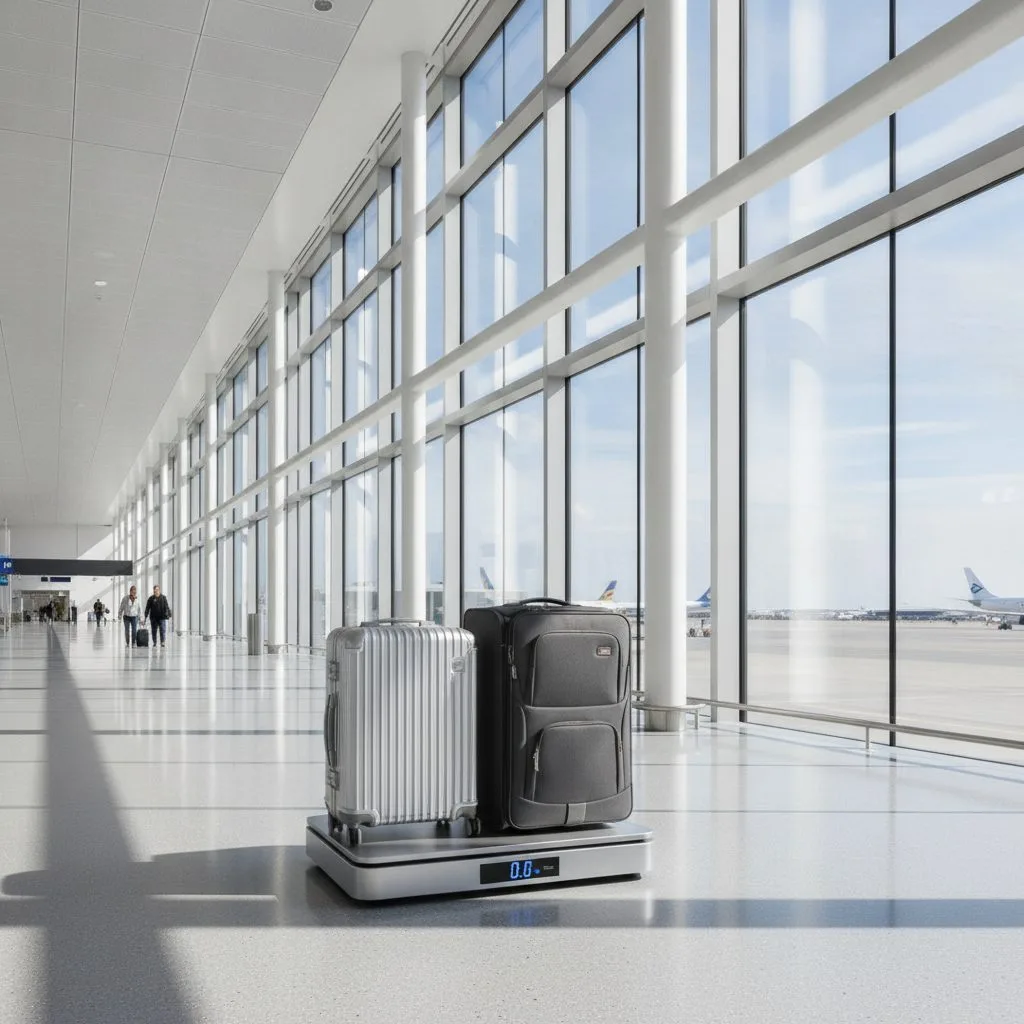
On most long-haul flights to Latin America and the Caribbean, the standard economy fare usually includes one 23 kg checked bag plus hand luggage — but, and here is the catch, it depends on the fare you buy: basic or "light" fares may include no checked bag at all, and adding one later costs more. Every week at the agency we see baggage scares that two minutes of reading would have prevented, so here is everything we check before issuing a ticket.
How much checked baggage does my ticket include?
The short answer: whatever your fare says — not what is customary. On long-haul flights to Punta Cana, Cancún, Bogotá or Havana, the norm in standard economy is:
- 1 checked bag of up to 23 kg per passenger.
- In higher fares (premium, business), 2 pieces or a higher weight.
- In basic/light fares, increasingly common on long-haul too: possibly no checked bag at all.
The classic mistake: comparing a "cheap" ticket without a bag against a normal one with the bag included. Once you add the (orientative) €60-100 for buying the bag afterwards, the cheap one is no longer cheap. When comparing prices, always compare the full trip with the baggage you need.
What hand luggage can I take?
The usual reference across most airlines on these routes is:
- 1 cabin bag of around 55 × 40 × 20 cm and 8-10 kg (each airline sets its exact dimensions).
- 1 personal item (handbag, small backpack, laptop sleeve) that fits under the seat.
Two warnings from experience: first, on very full flights — and Caribbean summer flights are — airlines frequently gate-check cabin bags for lack of space; carry your essentials (documents, medication, electronics) in the small personal item. Second, the airport scale does not negotiate: weigh your bag at home.
What allowance do the airlines on these routes give?
Orientative table of what the standard economy fare usually includes on Spain-Latin America/Caribbean flights:
| Airline | Checked (standard economy) | Cabin |
|---|---|---|
| Iberia | 1 × 23 kg (fare-dependent) | 1 piece + personal item |
| Air Europa | 1 × 23 kg (fare-dependent) | 1 piece + personal item |
| Avianca | Fare-dependent (basic fares may include none) | 1 piece + personal item |
| Iberojet | Fare-dependent | 1 piece + personal item |
| World2Fly | Fare-dependent | 1 piece + personal item |
Important: allowances change by fare, route and season. This table is a general reference — the figure that counts is the one on your specific ticket, and the definitive source is the airline's website. When we issue a ticket at the agency, the exact allowance is detailed on your confirmation.
How much does excess baggage cost?
Golden rule: anything you buy at the airport is the expensive version. The orientative ranges we see:
- An extra bag, or your first bag (if your fare does not include one): bought online in advance, noticeably cheaper than at the counter. The difference can exceed 30-50%.
- Overweight charges (a bag over 23 kg): usually charged in bands; going from 23 to 32 kg carries a fixed fee that often exceeds the cost of a second bag bought online.
Practical conclusion: if you suspect you will come home loaded (and people come home loaded from the Caribbean and Colombia: rum, coffee, gifts), buy the extra baggage online before the return flight, not at the counter.
How do I avoid overpaying? Our agency tricks
- Weigh your bag at home, outbound and above all before the return. A handheld luggage scale costs little and pays for itself in one trip.
- Split weight as a couple or family: the allowance is per person; two 20 kg bags pay nothing, one 27 kg bag does (and a second passenger at 16 kg does not offset the first one's excess — kilos do not pool between passengers on most airlines).
- Leave 2-3 kg of margin on the way out for shopping.
- Bulky clothing: wear it or carry it in the cabin on the return flight.
- Check the allowance before buying the ticket, not at the airport: it is part of the trip's real price. If you book with us, we do this maths for you when comparing fares, as we explain in our Punta Cana flight guide.
What can I not pack?
The aviation security essentials, which apply equally on flights to Punta Cana, Cancún or anywhere else:
- Liquids in the cabin: containers of up to 100 ml in a 1-litre transparent bag (the general rule at most airports; some with new scanners have relaxed it, but do not count on it).
- Power banks and lithium batteries: ALWAYS in the cabin, never checked in. This is an international safety rule. If you check a backpack with a power bank inside, it may end up held back.
- Lighters, aerosols, sharp objects: check the official list from AESA (Spain's aviation safety agency) if in doubt about any item.
- On the way home, watch out for food and plant products: each country (and the EU on your return) has its own customs restrictions.
And before you zip the suitcase, zip up the paperwork: review our guide to travel documents for Latin America. If you would rather not worry at all — with the right baggage included in your fare — tell us about your trip and browse our packages: you pack the bag, we handle the rest.
Frequently asked questions
How many kilos of baggage does a flight to Punta Cana or Cancún include? +
It depends on the fare. In standard long-haul economy the norm is 1 checked bag of 23 kg plus hand luggage, but basic or light fares may include no checked bag. Always check your ticket's exact allowance before buying.
Is it cheaper to buy extra baggage online or at the airport? +
Online, in advance, almost always. The same extra bag bought at the airport counter can cost 30-50% more (orientative figure). If you expect to return with more weight, buy the extra allowance online before your return flight.
Can I check a power bank in my suitcase? +
No. Power banks and lithium batteries must always travel in the cabin, never in checked baggage: it is an international aviation safety rule. Carry them in your hand luggage and, if in doubt about capacity limits, check your airline's and the aviation authority's rules.